Deciding between slingback heels and mules isn’t just about sticking to seasonal trends. It really impacts how comfortable you’ll feel, how stable you are on your feet, your confidence while walking, and even how often you end up wearing them. So, here’s the deal: a slingback keeps your heel secure with a strap, whereas a mule leaves your back open. That tiny difference actually shows up a lot—whether you're climbing stairs, walking on shiny floors, or just slogging through a long shopping day.
Now, according to Grand View Research, the global footwear market was valued at around USD 481 billion in 2023. And they expect it to keep growing through 2030, thanks to changing lifestyles and more fashion spending. But hey, these numbers don’t really tell you what shoe is going to suit your feet best. They mostly remind us that practical, well-designed shoes still matter in such a crowded market. The American Podiatric Medical Association suggests that when you're trying on shoes, you should pay attention to fit, support, and enough room for your toes—especially when you’re comparing narrower pumps to those softer, open-back mules.
Honestly, trying on shoes in real life often shows you things that photos just can’t capture. So, try both pairs late in the day when your feet are a little swollen, walk around on different surfaces—tile, carpet, even sidewalk—and watch for little annoyances like a strap rubbing your ankle or a mule that keeps slipping off with every step. If you want something a bit more stable for the commute, Slingback kitten heels could be a good pick—they tend to be lower and steadier. But just a heads-up: comfort isn’t all about heel height. Some mules feel pretty effortless, while others can make you feel like you’re gripping your toes the whole time.
Honestly, there’s no foolproof winner here. Your daily schedule, the shape of your feet, and the surfaces you walk on should really guide your choice. Even seasoned shoppers sometimes pick the more attractive pair and end up regretting it by lunchtime—that’s totally normal! It’s not a failure; it’s just good feedback. The smartest move is to find a balance between how they look and what your own feet tell you after trying them out.
What Defines Slingback Heels and Mules?
Slingback heels and mules differ mainly in how they hold the foot.
Slingbacks have a strap crossing behind the heel, often with a buckle or elastic section. Their toes may be pointed, rounded, or open. Mules have no rear strap. Instead, the upper covers the toes and midfoot while the heel remains open. That changes everything.
A slingback can feel more secure during office walking, especially when the strap fits firmly without cutting the skin. A mule slips on quickly, but the foot may work harder to keep it attached. Short steps can become necessary.
The distinction matters because Grand View Research valued the global footwear market at about USD 427.3 billion in 2023, showing how many consumers now compare comfort with appearance. The 2024 World Footwear Yearbook recorded roughly 22.4 billion pairs produced worldwide in 2023, with Asia supplying about 87.4 percent. These figures reflect scale, not perfect fit.
When choosing, check whether your heel stays centered after ten steps. Look for pressure across the toes, uneven slipping, and rubbing behind the ankle. A slingback is not automatically stable; a loose strap can still cause sliding. A mule is not always casual; a structured upper can support the foot surprisingly well. I once trusted the silhouette too quickly. That was a mistake. Your walking pattern, foot width, and daily surface should decide more than the shoe’s name.
How Slingback Heels and Mules Differ in Design
Slingback heels and mules may look similar from the front, but their designs behave differently. Slingback Sandals Heels use a rear strap that anchors the shoe around the heel. That strap can include an adjustable buckle, elastic panel, or narrow leather band. Mules leave the heel open, so the upper must grip the toes and instep securely.
The difference is practical. A slingback usually feels more stable when walking across polished floors or climbing stairs. Its strap limits heel lift, though a loose strap can rub after several hours. A mule slips on quickly and exposes more of the ankle. Its open back also creates a sharper, lighter silhouette. However, the foot may work harder to keep the shoe attached. A 2014 American Podiatric Medical Association survey reported foot pain among roughly 71% of women, making fit more important than appearance alone.
Heel height changes both styles. A low, broad heel distributes pressure better than a thin, high heel. Grand View Research estimated the global footwear market at about USD 1.5 trillion in 2023, reflecting strong demand for varied everyday footwear. That figure does not prove comfort, but it shows how large the choice has become. My fitting checks are not always perfect. I sometimes prefer a beautiful mule, then regret it after a long pavement walk. Try both shoes on, bend the toes, and inspect whether the strap or vamp presses the skin.
Comparing Comfort, Support, and Stability
How to Choose Slingback Heels Vs Mules?
When comparing slingback heels with mules, comfort depends on more than heel height. A slingback strap cups the heel and limits forward sliding. That extra contact often feels reassuring on stairs or uneven pavement. Yet a narrow strap can rub after several hours. I have found that soft edges matter as much as cushioning. Mules feel quicker to wear, with no rear strap to adjust. Their open back can also let the foot lift repeatedly. That movement may tire the toes as they grip the insole. Not always comfortable.
For support, inspect the footbed, arch shape, and fastening system. A stable slingback should hold the heel without pinching the Achilles area. A mule needs a firm, contoured footbed to reduce sliding. Look for a broad toe box, especially with Slingback Heels Open Toe styles. Exposed toes need room, not pressure from a pointed front. A flexible upper may feel pleasant indoors but lack control outdoors. Small details become obvious.
Stability comes from the sole, heel placement, and contact with the ground. A lower, wider heel usually feels steadier than a thin high heel. Test both shoes on a hard floor before buying. Walk, pause, and turn slowly. Notice whether your heel lifts or your ankle wobbles. Try them late in the day, when feet are slightly swollen. This practical check helps, though it cannot predict every commute. I once chose a beautiful mule for long walking and regretted the missing heel support. Short errands might have suited it better.
How to Choose Slingback Heels vs Mules?
Comparison of comfort, support, and stability based on common footwear design features. Scores use a 1–10 scale, where a higher score indicates a stronger practical advantage.
Slingback heels generally provide better heel retention and walking stability because the rear strap helps keep the foot secure. Mules are easier to put on and can feel more breathable, but their open-back construction usually offers less support during extended walking.
Choosing the Right Style for Different Occasions
Choosing between Slingback Heels and mules depends largely on the occasion, comfort, and how much support you need. Slingback Heels have an adjustable strap around the heel, which helps keep your foot secure during office hours, weddings, and long dinners. Their open back still feels light, but the strap can rub if it is too tight.
Mules slip on easily and suit relaxed occasions, such as weekend lunches, gallery visits, or short evening events. They work well with cropped trousers, flowing dresses, and tailored shorts. However, walking quickly in loose mules can feel awkward, especially on stairs or uneven pavement. I have found that a stable heel and a shaped footbed matter more than appearance alone. Still, even a carefully chosen pair may need several short wears before a full-day event.
Tips: Match the heel to the setting. Choose a lower, wider heel for commuting or outdoor ceremonies. Reserve delicate, higher styles for seated occasions. Check the sole before buying; smooth soles may slide on polished floors. Wear them indoors for ten minutes and notice pressure near the toes, strap, and heel. If your foot keeps lifting from a mule, reconsider the size or style. Comfort is not always immediate, and that is worth admitting.
Matching Each Shoe Type to Your Wardrobe
How to Choose Slingback Heels Vs Mules?
Matching Each Shoe Type to Your Wardrobe
Slingback heels work well when your wardrobe needs structure and gentle support. Their back strap keeps the shoe steadier during office commutes or busy events. Pair them with tailored trousers, midi skirts, or a fitted dress. A pointed toe adds polish, while a rounded toe feels softer with relaxed linen. I often choose slingbacks for outfits that already have movement, such as wide-leg pants. The strap quietly balances the volume.
Mules suit wardrobes built around ease. Their open back looks modern with cropped jeans, flowing trousers, or a simple slip dress. Choose a low heel for daytime errands and a sculpted heel for dinner. However, mules can slide during long walks. That small detail is easy to ignore. I once wore them with loose trousers and kept adjusting my step. The outfit looked good, but the comfort failed.
Tips: Match the shoe’s formality to your clothing fabric. Smooth leather-like textures suit tailored pieces, while woven or matte finishes complement casual outfits. Check the heel height against your walking routine. Try both shoes near the end of the day, when feet are slightly fuller. Also, inspect the strap or vamp for pressure. A beautiful pair is still a poor choice if your toes grip constantly. Wardrobe rules help, but your actual habits matter more.
Evaluating Fit, Materials, and Foot Shape
Choosing between slingback heels and mules starts with how your foot moves, not only with appearance. Slingbacks use a rear strap to reduce heel lift. Mules leave the heel open, so they are faster to put on. That freedom can become tiring during long walks. Try both styles late in the day. Feet may swell slightly after hours of standing. I once chose a mule that felt perfect indoors. It slipped badly on stairs. That small test changed my view.
Material affects comfort and fit. Soft leather may gradually adapt to the forefoot, but it should not feel painfully tight at first. Textile uppers can feel breathable, although they may offer less structure. Firm synthetic materials often keep their shape well, but they may rub sensitive areas. Check the edge around the topline. It should lie smoothly against your skin. Walk across a hard floor and test several steps. A padded footbed helps, but cushioning cannot fix poor sizing.
Foot shape matters more than a general style rule. A wider forefoot usually needs a rounded or roomier toe box. Narrow heels may hold better in slingbacks with adjustable straps. High insteps can feel restricted by closed mule uppers. Mules may suit feet that dislike rear straps, but they require controlled steps. Shorter heels often feel steadier for daily use. I still find some “perfect” fittings disappointing after an hour. Comfort needs a real-world test, not just a mirror check.
Making the Final Choice Between Slingbacks and Mules
Making the Final Choice Between Slingbacks and Mules
Choosing between slingbacks and mules depends on how your feet move during a real day. I have worn both styles through office commutes, dinners, and uneven pavements. I still get this wrong. A mule feels wonderfully easy at first, but it may slide when you walk quickly. Slingbacks usually offer better rear support, especially when the strap sits securely below the ankle bone.
For polished outfits, Pointed Toe Slingback Heels create a longer visual line with tailored trousers or a narrow skirt. Their pointed front can feel restrictive, though. Leave a small amount of space beyond your longest toe, and check for pressure after ten minutes. Mules work better with relaxed dresses, wide-leg pants, and warm weather. Look for a stable heel and a footbed that does not force your toes forward.
Walk before deciding. Try both pairs on a firm floor, then take several steps and pause. Your heel should not lift excessively, and your toes should not grip the insole. A soft strap can become loose with wear, while stiff materials may cause rubbing before they soften. I sometimes choose the prettier pair and regret it by lunchtime. For long events, slingbacks are usually the safer option; for brief occasions, mules can provide effortless movement when the fit stays secure.
On Feet & In Love: Styling Red Croc Horsebit Slingback Heels for Every Occasion
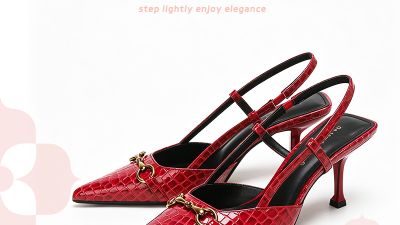
On Feet & In Love begins with a confident color choice: glossy red croc-embossed slingback heels that turn a classic silhouette into an occasion-ready statement. Industry forecasts from Statista Market Insights place global footwear revenue in the hundreds of billions of dollars each year, reflecting the enduring demand for shoes that combine function with fashion. These pointed pumps answer that demand with vintage-inspired gold horsebit hardware, adjustable slim sling straps, and a sculpted trapezoid stiletto that visually lengthens the legs. The bright finish pairs beautifully with a black satin dress for date night, while a cream tailoring set creates a polished contrast for dinner or gallery events.
For holiday galas, style them with velvet, sequins, or a streamlined jumpsuit, allowing the red patent texture to remain the focal point. The shoes are equally effective with dark denim, a silk blouse, and sculptural jewelry when an evening look needs a more relaxed attitude. Comfort supports the styling versatility: padded insoles help reduce all-night fatigue, and silent rubber outsoles keep every step discreet on polished floors. McKinsey & Company’s *The State of Fashion 2024* also highlights consumers’ growing preference for meaningful, versatile purchases, making a dramatic red heel especially useful when it can move from romantic dinners to festive celebrations without losing its visual impact.
FAQS
: Slingback heels use a rear strap around the heel. Mules leave the heel completely open. This changes walking control.
Slingbacks often feel steadier on stairs and uneven pavement. The strap limits heel movement. A wide, low heel helps even more.
Sometimes, but not always. Your toes may grip the footbed repeatedly. That effort can cause tiredness during a long pavement walk.
Walk, pause, and turn slowly. Check whether the strap presses your Achilles area. A tight strap may rub after several hours.
Choose a firm, shaped footbed and a roomy toe box. The upper should hold your foot without squeezing it. Loose movement is a warning.
Slingbacks can suit office hours, weddings, and long dinners. Their strap offers extra security. Still, comfort depends on the actual fit.
Mules suit short outings, gallery visits, and relaxed lunches. They slip on quickly. Stairs and uneven ground may feel awkward.
Yes. A lower, broader heel usually distributes pressure more evenly. Thin, high heels may feel less stable. Appearance can mislead.
Try both shoes late in the day. Feet may be slightly swollen then. Wear them indoors for ten minutes and notice pressure points.
Definitely. I have chosen attractive mules and regretted them after long walks. Short errands might have suited them better. This mistake is easy to repeat.
Conclusion
Choosing between Slingback Heels Vs Mules depends on your preferred balance of style, comfort, and support. Slingback heels feature an open back with a strap that secures the heel, offering a more stable fit and a polished appearance. Mules are backless shoes that slip on easily, making them convenient and relaxed, but they may provide less heel support. Their designs can range from elegant and structured to casual and simple, so each style suits different occasions and wardrobe needs.
When making your choice, consider where you will wear the shoes, how long you will remain on your feet, and what outfits you want to complement. Slingbacks are often suitable for professional settings, formal events, and tailored clothing, while mules pair naturally with casual, modern, or effortless looks. Fit, material, heel height, toe shape, and your individual foot structure also matter. Ultimately, choose slingbacks for security and stability, or mules for easy wear and a relaxed sense of style.