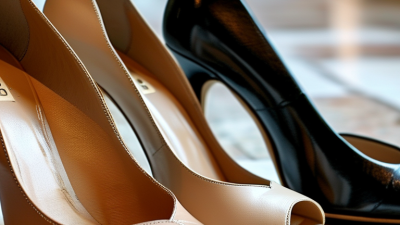
So, figuring out how slingback heels should fit isn’t just about style — it’s a comfort thing, a question of balance, and your foot health too. Basically, your heel should sit snugly without slipping out, but your toes gotta stay relaxed and free from being squeezed. The longest toe shouldn’t be pressed right up against the front of the shoe, and you want enough wiggle room for each toe to move just a little.
Dr. Jacqueline Sutera, a foot surgeon, has a simple rule that really hits the mark: “If it hurts, it’s the wrong shoe.” I know, it sounds obvious, but let’s be honest — sometimes we ignore that for weddings, work parties, or photos, focusing more on how they look. I’ve been guilty of that too. A heel that looks gorgeous can still rub, give you blisters, or make you wobbly while walking.
The back strap needs to sit securely around your heel — not too tight, but not loose enough to slip off. It shouldn’t dig into your skin or sit too low below the heel bone. Make sure to walk around on a hard floor before you buy; test out stairs, turns, and just standing in them. Keep in mind, your feet tend to swell later in the day, so trying them on in the evening can actually help spot issues early. Sure, thin straps look super elegant, but wider ones tend to spread out pressure better, making them more comfortable.
Heel height also plays a big part. Usually, a lower, wider heel is much more stable than a super high stiletto. Soft leather might stretch a bit over time, but that doesn’t fix a shoe with a cramped toe box — something many people overlook when shopping. If you need extra space, it’s worth comparing options like Wide Fit Bridesmaid Shoes. Especially when you’re planning to wear them for hours, having enough room matters.
This guide walks you through ten practical tips on how slingback heels should fit. It combines expert advice from podiatrists, real-world fitting experience, and just some workarounds for typical issues. Spoiler alert — no shoe fits everyone perfectly, and honestly, that’s a part many style guides tend to overlook.
What Is the Correct Fit for Slingback Heels?
The correct fit for slingback heels begins with stability, not appearance. Your toes should lie flat, without curling or pressing against the front. Leave about 8–10 millimeters between your longest toe and the shoe’s end. The heel should sit securely, but the strap must not cut into your skin. A slingback that slips with every step is too loose. One that leaves red marks is too tight. The American Podiatric Medical Association reported that 77% of women have experienced foot pain. Poorly fitted footwear can contribute to that discomfort.
Walk on a firm surface before buying. Your heel should remain inside the shoe while your weight shifts forward. The ball of your foot must rest over the widest part of the sole. Check both shoes, because feet often differ slightly in length. Try them later in the day, when feet may swell. This detail is easy to ignore. It should not be. A fitting mistake may feel minor in a shop, then become painful after two hours. Research published in the Journal of Foot and Ankle Research also links inadequate footwear fit with pressure and discomfort.
Tips: Adjust the strap while standing. Test several steps, turns, and stairs. Avoid relying on stretched leather or padding to fix a poor fit. If your toes feel numb, stop wearing them. A little movement is normal; sliding is not.
A correct fit should satisfy all ten checks: the toes need approximately 10–15 mm of space, the heel should remain secure with minimal lift, and the slingback strap should feel supportive without cutting into the skin. Try both shoes while standing and walking, preferably later in the day when feet are slightly larger.
Slingback heels should leave about 6 to 10 millimeters of space beyond your longest toe. This small gap lets your toes extend naturally while walking. Your longest toe may not be your big toe. Check both feet, because they often differ slightly.
Try the shoes in the afternoon, when feet are usually larger. Stand fully upright and walk across a hard floor. Your toes should not touch the front, even when your heel lifts slightly. Too much space can make your foot slide forward and strain the toes. Too little space may cause pressure, rubbing, or darkened nails. It should feel secure.
I often test the fit with one slow step downhill. That reveals forward movement better than standing still. A thin, flexible insole can change the available space, so test the shoes with your usual hosiery. Avoid judging fit only by touch. Some materials soften later, but they rarely create meaningful extra length. My own mistake was accepting a tight toe box because the heel felt stable. The result was sore toes after one evening. Comfort matters more than a perfect appearance.】【。
A slingback strap should rest securely around the back of your heel, not underneath it. The best position is usually just below the ankle bone, where the heel narrows slightly. It should feel firm without pressing into the Achilles tendon. Too high, and the strap may rub with every step. Too low, and it can slip beneath your heel.
Try the shoes on both feet, since foot size often differs slightly. Walk across a hard floor and notice whether the strap moves. A small shift is normal. Constant slipping is not. The buckle should allow one finger of space, though this is only a starting point. Some straps stretch after several wears. I once tightened a pair too much, thinking it would stop slipping, but the result was sore skin and shorter walks. That was a useful mistake.
Your heel should remain centered while your toes stay relaxed. If your foot slides forward, the strap may not be the real problem; the shoe could be too loose through the front. Even people used to Wide Fit Ankle Boots may need a narrower slingback shape. Check the strap after ten minutes, not just during a quick fitting. Look for red marks, lifted edges, or a clicking buckle. Comfort can feel slightly unfamiliar at first, but pain is a warning.
A well-fitting slingback heel should feel secure before it feels beautiful. I check width at the ball of the foot, where toes spread naturally. Stand on a hard floor and place a finger beside the widest area. If the upper presses firmly, or your little toe slips over the edge, the shoe is too narrow. Leave about 6–10 millimeters beyond the longest toe. That space allows swelling during a warm day. Try both shoes in the afternoon. Feet rarely match perfectly. I once trusted the larger foot and ignored the smaller one; the strap later rubbed badly.
Arch support deserves a separate test. Walk slowly and notice whether your arch feels lifted, not pinched. The sole should contact the middle of your foot without creating a hard ridge. Bend your knee, rise onto the balls of your feet, and take several steps. If your heel lifts repeatedly, adjust the slingback strap, but do not over-tighten it. Red marks after five minutes are useful evidence, not a break-in challenge. A podiatry professional can assess persistent pain or unusual pressure. Cushioned insoles may help, though they can reduce interior width. The same width check matters for Wide Fit Knee High Boots: measure the foot, calf, and instep, rather than trusting the label alone. Fit is personal. My preferred snug feel may not be truly supportive.
Poorly fitting slingback heels often reveal themselves before pain becomes severe. The heel may lift with every step, while the strap slides toward the ankle. That movement creates friction, redness, and eventually blisters. A loose slingback can also make your toes grip the footbed. This may feel like extra control, but it quickly tires the forefoot. Watch for discomfort.
During fitting, walk on a firm floor for several minutes. Your heel should stay mostly seated, not pop out repeatedly. The strap should feel secure, never tight enough to leave deep marks. Check whether your toes hang over the front or press against the upper. They need room to move. A pointed toe can feel acceptable while standing, then become painful after walking. That happened to me with a pair I liked too much. I dismissed the warning signs. Bad decision.
Uneven pressure is another clue. If the ball of your foot burns, the shoe may shift weight forward. If the arch feels unsupported, its shape may not match your foot. Try fitting later in the day, when feet commonly swell. Compare both shoes, because one foot is often slightly larger. Walk upstairs if possible. Do not rely on breaking them in to fix a slipping heel or severe pressure. A professional fitting assessment can help when discomfort continues, especially with recurring blisters or numbness.
| No. | Fit Question | Signs of a Proper Fit | Signs of a Poor Fit | What to Check or Adjust |
|---|---|---|---|---|
| 1 | How should the heel strap sit? |
Good fit The strap rests securely around the back of the heel without digging into the skin. |
Poor fit The strap slips down repeatedly, cuts into the heel, or leaves painful red marks. |
Adjust the strap if possible. If it still slips or causes pressure, try a different heel-cup shape or size. |
| 2 | Should the toes touch the front? |
Good fit Toes lie flat and have enough room to move without pressing against the front edge. |
Poor fit Toes are curled, squeezed together, or pushed against the toe box while standing. |
Choose a wider or roomier toe box. Do not rely on painful stretching to create needed length. |
| 3 | How much space should be in front of the longest toe? |
Good fit A small amount of space remains between the longest toe and the shoe’s front, with no contact during walking. |
Poor fit The longest toe presses into the front, or excessive space lets the foot slide forward. |
Try the shoes while standing, because feet lengthen slightly under body weight. Compare both feet. |
| 4 | Should the foot slide forward? |
Good fit The ball of the foot stays over the widest part of the sole, and the toes do not continually slide forward. |
Poor fit The toes bunch at the front, the heel lifts, or the foot moves noticeably with each step. |
Check the incline and strap tension. A lower heel or better-contoured footbed may reduce forward sliding. |
| 5 | How should the width feel? |
Good fit The widest part of the foot aligns with the widest part of the shoe without side pressure. |
Poor fit The little toe is pushed inward, the foot bulges over the sole, or the sides feel numb or compressed. |
Look for a wider design or a more suitable toe shape. Width should not be corrected by sizing up excessively. |
| 6 | Should the heel lift when walking? |
Good fit Only minimal natural movement occurs, while the shoe remains stable through the step. |
Poor fit The heel lifts substantially, the shoe feels loose, or the foot repeatedly comes out of the shoe. |
Recheck the heel strap and overall length. Avoid overtightening, since it can create pressure and friction. |
| 7 | Where should pressure be felt under the foot? |
Good fit Body weight feels reasonably distributed across the heel and ball of the foot. |
Poor fit Strong pressure is concentrated under the forefoot, heel, or a single bony area. |
Consider a lower heel, a cushioned insert, or a footbed with better support. Persistent pain means the style may not suit you. |
| 8 | What does a properly fitted strap feel like? |
Good fit The strap is secure enough to prevent movement but allows comfortable circulation and normal ankle motion. |
Poor fit There is tingling, numbness, swelling, discoloration, or a deep indentation around the ankle. |
Loosen the strap and walk again. Stop wearing the shoes if symptoms continue or circulation feels restricted. |
| 9 | How should the shoe feel after walking? |
Good fit The shoe remains comfortable after several minutes, with no hot spots or developing blisters. |
Poor fit Burning, rubbing, blisters, or red areas appear quickly on the heel, toes, or ball of the foot. |
Test shoes indoors on a clean surface. Use protective padding only for minor friction, not to compensate for an incorrect fit. |
| 10 | When is the size clearly unsuitable? |
Good fit Both feet feel supported, the shoe stays stable, and walking does not require gripping with the toes. |
Poor fit You must clench your toes, limp, shift your weight unnaturally, or constantly readjust the shoe. |
Try another size, width, heel height, or shape. Fit should feel stable immediately rather than becoming painful over time. |
Fit tip: Measure and try on slingback heels later in the day, when feet may be slightly swollen. Always stand and walk in both shoes before deciding whether the fit is suitable.
Slingback heels should feel secure, not restrictive, when you walk. Your heel may lift slightly, but it should not slide out with every step. The strap must sit comfortably around the back of your foot, without digging into the skin or loosening after several minutes. Walk across a hard floor, turn, and climb a few steps. If your toes grip the shoe to keep it on, the fit is probably unstable.
Your forefoot needs enough room to spread naturally. The widest part of your foot should match the shoe’s widest area, while your toes should not press against the front. The American Podiatric Medical Association reported that 77% of women had experienced foot pain in its 2014 survey. Poor shoe fit was among the practical concerns linked with daily footwear choices. That figure still feels uncomfortably relevant.
Check for heat, rubbing, or pressure beneath the ball of the foot after ten minutes. A low, steady heel often feels easier to control than a narrow, sharply angled one. However, comfort is personal. I once mistook tight support for a better fit; walking farther proved otherwise. Wide-foot shoppers may compare the same fitting logic with Ladies Wide Fit Ankle Boots, especially around toe space and forefoot pressure. If the strap leaves a red mark, or your heel keeps escaping, change the size, width, or style. Pain is not a break-in plan.
A good slingback fit feels secure without squeezing your foot. Your heel should rest inside the shoe, not hang over the edge. When walking, the back strap may move slightly, but it should not drop below your heel. Your toes need room to spread naturally. I find that Slingback Kitten Heels often feel comfortable at first, then loosen after several hours. Check them on a firm floor before wearing them outdoors.
Tips: Adjust the strap one hole at a time. Start with the middle setting, then walk for five minutes. If the strap slips, tighten it gently. Avoid pulling it too hard, because pressure can cause redness behind the ankle. A thin heel grip can improve stability, but test it with socks or bare feet first. Some grips add too much bulk.
If the shoes feel loose across the front, try a discreet forefoot pad. It can reduce sliding without changing the heel position. If your toes touch the front, do not compensate by tightening the strap. The shoe may simply be too short. A shoe professional can sometimes add a new strap hole or soften a stiff edge. I once tightened a pair too much and regretted it halfway through an event. Comfort needs real walking time, not only a quick mirror check.
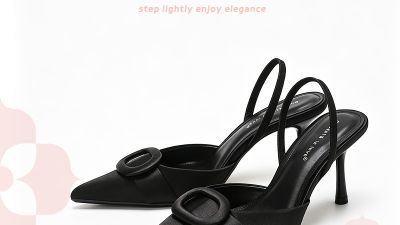
Step Into Romance: Styling Black Satin Ring Slingback Stilettos for Every Occasion
Black satin ring slingback stilettos bring a refined sense of romance to any wardrobe. Their sleek pointed silhouette creates an elegant, lengthened look, while the smooth matte finish adds quiet sophistication without appearing overly formal. A matching satin circular ring detail draws attention to the shoe’s graceful shape, and the slim stretch sling strap keeps the design delicate and secure. Pair them with a flowing midi dress for a cocktail party, allowing the pointed toe and sculpted heel to add polished definition to every step.
For business galas or formal evening events, style these pumps with a tailored black jumpsuit or a sharply cut suit. Their minimalist surface complements structured clothing, while the subtle satin texture introduces a soft, feminine contrast. For a more understated occasion, wear them with cropped trousers and a silk blouse, creating an effortlessly elegant look that transitions from desk-side conversations to evening cocktails.
Designed for more than visual appeal, these stilettos feature plush padded insoles to help ease foot fatigue during extended wear. Silent rubber outsoles reduce tapping sounds across polished floors, making them a thoughtful choice for quiet venues and intimate gatherings. From romantic dinners to sophisticated celebrations, their versatile black finish makes them an easy foundation for graceful styling.
: Leave about 6–10 millimeters beyond your longest toe. Your longest toe may not be the big toe. Check both feet. The gap should allow natural movement without forward sliding.
Try them in the afternoon, when feet often swell slightly. Wear your usual hosiery. Stand upright and walk across a hard floor. Fit should remain comfortable.
Take one slow step downhill. This reveals sliding better than standing still. Your toes should not touch the front when your heel lifts slightly.
Repeated heel lifting, sliding straps, redness, blisters, or tired toes suggest poor fit. Burning beneath the forefoot may indicate excessive forward pressure. Numbness needs attention.
The strap should stay around your heel without dropping below it. It should feel secure, not painfully tight. Deep marks indicate excessive pressure.
No. Tightening cannot create extra toe space. It may worsen pressure and rubbing. If your toes touch the front, the shoe may be too short.
Adjust the strap one hole at a time. Start from the middle setting. Walk for five minutes, then reassess. A thin heel grip may improve stability, but added bulk can cause pressure.
A discreet forefoot pad can reduce forward movement. Test it with your usual socks or bare feet. Avoid thick padding if your toes already feel crowded.
No. Materials may soften, but they rarely add meaningful length. Severe pressure and slipping usually remain. I once ignored a tight toe box and regretted it after one evening.
Consider professional advice if discomfort continues, especially with repeated blisters or numbness. Compare both shoes carefully. One foot is often slightly larger.
Finding the right fit is essential for comfort, stability, and confident movement. How Should Slingback Heels Fit? They should feel secure without squeezing, with enough room for the toes to rest naturally and avoid pressing against the front. The heel strap should sit comfortably around the back of the foot, staying in place without digging into the skin or slipping during movement. Proper width, balanced arch support, and a stable heel also help reduce pressure and improve overall comfort.
When walking, well-fitted slingback heels should feel steady rather than painful, loose, or difficult to control. Common signs of a poor fit include rubbing, pinching, heel slippage, cramped toes, numbness, and unusual pressure under the arch. If needed, the fit can be improved by adjusting the strap, using suitable cushioning, or choosing a different size or width. Trying them on while standing and walking is the best way to confirm a comfortable fit.