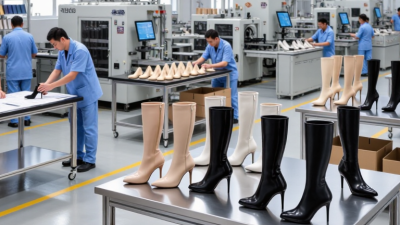
When we talk about how much it costs to make high heels, it’s not just about leather, labor, or how long a factory takes—there’s a lot more under the surface. Every pair reflects big-picture stuff like design goals, sourcing choices, production risks, and the standards that keep everything looking perfect at the end. Take a sleek stiletto, for instance. It might seem simple at first glance, but behind that elegance, there's often a complex structure—think precise lasts, reinforced heels, well-balanced insoles, and plenty of fitting tests—that all play a role.
Christian Louboutin, the famous shoe designer, once said, “Shoes transform your body language and attitude. They lift you physically and emotionally.” That really hits home for manufacturers, because a high heel isn’t just about making a shoe look good. It has to be comfortable, stable, and durable too. All these factors—materials, construction methods, quality control—affect the final price. The same goes for Thigh High Heel Boots. Longer shafts, extra support, and careful pattern cutting hike up production costs.
In this guide, we’ll walk you through the Top 10 Factors that influence how much it costs to produce high heels. Things like materials, skilled labor, molds, heel design, order size, packaging, testing, and logistics—every one of these can swing the budget. Sometimes, even a tiny metal detail can completely change the cost picture.
Now, keep in mind: these estimates aren’t set in stone. Different factory regions have their own prices, supplier terms can vary, and waste is often underestimated. A lower quote might also hide corners cut on inspections or inconsistent sizing—so it’s worth digging a little deeper.
For brands like Jimmy Choo, Stuart Weitzman, or smaller private labels, controlling costs shouldn’t mean sacrificing quality or careless construction. The smart approach is comparing samples, keeping detailed specs, and testing products under real-world conditions. The goal isn’t just to make heels as cheaply as possible but to create something that’s worth every penny they’re sold for.
Raw Materials and Their Influence on High Heel Production Costs
Top 10 Factors Affecting High Heel Manufacturing Cost
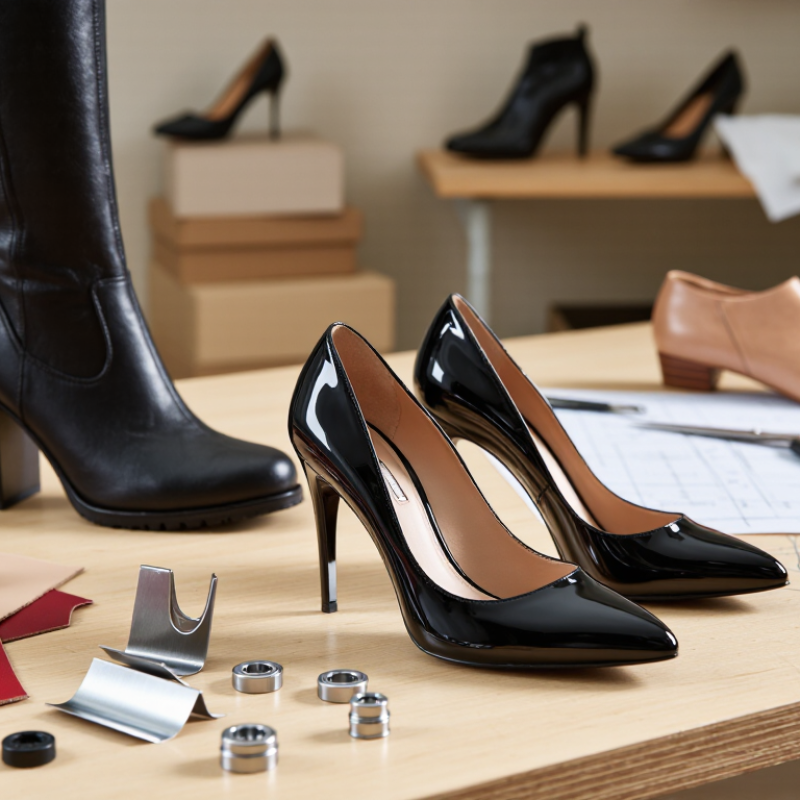
Raw materials often determine the largest share of high heel production costs. Leather, synthetic uppers, linings, soles, heels, adhesives, and metal fittings each affect the final quotation. Full-grain leather usually costs more because it offers natural texture and stronger wear resistance. Synthetic materials may reduce expenses, but their quality can vary between suppliers. Small differences matter.
Heel materials also influence cost and performance. A molded plastic heel is often economical for standard designs. Wood, wrapped finishes, or reinforced components require more labor and inspection. Dense outsole rubber can improve grip, yet it may increase material weight and shipping costs. Metal decorations add purchasing and handling expenses. Every detail leaves a trace in the budget.
Material selection should match the shoe’s intended use, not just its appearance. A thin lining may look acceptable during sampling but cause discomfort during extended wear. That creates returns, rework, and hidden costs. Production teams should check thickness, flexibility, color consistency, and bonding strength before bulk purchasing. Supplier reliability matters too. Late deliveries can stop an entire assembly line.
Cost estimates are never perfect. Natural leather changes in texture and usable cutting area, so waste is difficult to predict. A careful manufacturer records cutting loss from each batch and revises the costing sheet. This practical step may seem minor. It often prevents a polished design from becoming an unprofitable product.
Heel Design, Shoe Structure, and Manufacturing Complexity
Top 10 Factors Affecting High Heel Manufacturing Cost
Heel Design, Shoe Structure, and Manufacturing Complexity
Heel design often sets the cost direction before production begins. A slim stiletto needs stronger internal support than a wide block heel. Heel height also changes balance, material use, and testing requirements. I have seen small shape changes add extra machining time. A sharp curve can look elegant, yet it may require a custom mold.
Shoe structure matters just as much. A layered upper, reinforced toe box, and padded insole increase cutting and assembly work. Platform soles may require separate bonding, pressing, and alignment checks. Each added layer creates another chance for wrinkles, weak glue lines, or uneven edges. Small errors become expensive during final inspection.
Manufacturing complexity includes tooling, worker skill, production speed, and quality control. Complex heels often need slower injection or longer finishing time. Hand sanding may be necessary around narrow joints. It feels minor, but minutes multiply across thousands of pairs. Material waste also rises when curved patterns leave awkward scraps. Digital prototypes reduce some mistakes, although they cannot fully predict leather stretch or adhesive behavior. That is where costing becomes less certain. A practical estimate should include trial samples, failed parts, and equipment adjustments. Cheap planning can become costly rework.
Labor Requirements and Production Skill Levels
Labor is a major cost driver in high heel manufacturing because every pair requires precise, repeated handwork. Cutting leather, shaping uppers, attaching heels, and finishing edges demand different skill levels. The World Footwear 2024 Yearbook reported approximately 22.4 billion pairs of footwear were produced globally in 2023. This scale increases pressure to train workers quickly while protecting quality.
High heel production is less forgiving than many flat styles. A small stitching error can distort the toe box or weaken the heel joint. Skilled technicians usually earn more, but they also reduce rework, material waste, and inspection time. The U.S. Bureau of Labor Statistics reports that sewing machine operators and footwear-related production workers remain specialized manufacturing occupations, with pay influenced by location, experience, and productivity. However, public data rarely isolates high heel factories. Cost estimates can therefore be imperfect. Factory records should be checked before making pricing decisions.
Tips: Map each operation by minutes, not job title. Record training hours, rejected pairs, and repair time. Consider a small skill premium for workers handling heel attachment and final fitting. Comfortable High Heel Shoes require more than attractive design; they need controlled assembly and consistent testing. A cheaper labor plan may look efficient. It can become expensive after returns and rework.
Manufacturing Technology, Equipment, and Factory Overheads
High heel manufacturing cost depends heavily on technology, equipment, and factory overheads. In practice, a precise cutting system can reduce leather waste and improve size consistency. However, its purchase price, software, maintenance, and operator training increase early expenses. Manual cutting may seem cheaper, yet it often creates uneven edges and slower production. That difference becomes costly when making Block Heel Knee High Boots with large leather panels.
Equipment choices also shape labor and energy costs. A lasting machine, hydraulic press, and heel drilling unit can shorten production time. They require electricity, repairs, safety checks, and skilled technicians. Poorly calibrated machines may damage uppers or leave visible pressure marks. Reworking one pair can consume more time than producing it. Factory overheads include rent, lighting, ventilation, quality inspection, storage, and production planning. These costs remain even when orders are small. Smaller workshops may control spending, but their output can fluctuate. That is a weakness worth admitting.
Tips: Compare equipment by total operating cost, not purchase price. Track cutting waste, machine downtime, labor minutes, and rework rates for each style. Keep a monthly overhead sheet. Test a small batch before expanding production. A practical review may reveal that a slower process creates fewer defects and lower final costs. Measure twice. Adjust carefully.
Top 10 Factors Affecting High Heel Manufacturing Cost
Indicative percentage allocation of total manufacturing cost in a standardized high heel production model.
The estimates reflect typical cost drivers in footwear manufacturing and vary by product complexity, production volume, labor market, and factory location.
Finishing Processes, Quality Standards, and Defect Control
Finishing processes can quietly raise High Heel Loafers manufacturing costs. The World Footwear Yearbook 2024 reported about 22.4 billion footwear pairs produced globally in 2023. At this scale, a small defect rate becomes expensive. Uneven edge paint, loose threads, dull hardware, and visible glue can trigger rework or rejection. Hand polishing and repeated color matching also increase labor minutes.
Quality standards make these costs measurable. ISO 2859-1 supports acceptance sampling through defined lot sizes and inspection levels. Factories can inspect heel height, leather shade, bonding strength, and surface scratches before packing. For high heels, heel attachment deserves special attention. A slight angle error may create instability, customer complaints, and returned goods. Yet inspection alone is not enough. Poorly trained operators still miss soft wrinkles under bright showroom lighting. That weakness needs honest review.
Tips: Set a finishing checklist beside each workstation. Photograph approved samples under fixed lighting. Record defects by process, not only by worker. A simple Pareto chart often exposes the largest cost source. Use trial pairs before mass production. Keep failed samples for training. Small details matter.
A practical defect-control system should combine in-line checks, final inspection, and periodic laboratory testing. Measure peel strength, color consistency, and sole adhesion. Keep records for every production batch. The data may reveal that cheaper materials create higher finishing costs. This is not always obvious. Sometimes, the “efficient” process needs changing.
Order Volume, Supply Chains, and Customization Expenses
Top 10 Factors Affecting High Heel Manufacturing Cost
Order volume often changes high heel costing more than the heel itself. A 500-pair run spreads pattern, sampling, and tooling charges across very few units. At 5,000 pairs, those fixed costs may fall sharply per pair. However, capacity reservations, deposits, and inspection labor still require cash. Small orders can be expensive. The World Footwear Yearbook 2024 reports that Asia produced 87.4% of global footwear in 2023. This concentration supports competitive pricing, but it also exposes buyers to regional freight shocks. The figure is useful, not perfect.
Supply chains add less visible costs. A delayed leather shipment can leave uppers unfinished beside idle sewing machines. UNCTAD’s Review of Maritime Transport 2024 reported major shipping disruptions through the Suez Canal during 2024. Longer routes can raise freight, insurance, and buffer-stock expenses. Buyers should compare total landed cost, not only the factory quotation. One missing component can stop production.
Customization creates another cost layer. A new heel mold may require engineering, testing, and several rejected samples. Custom colors can demand minimum dye lots and separate quality checks. High Heel Boots with metal trims, mixed materials, or unusual shaft heights need more assembly time. Personalization sounds simple. It rarely is. A detailed cost sheet should separate development fees, unit costs, packaging, and revision charges. My practical concern is that early quotes often ignore rework, then surprise both sides later.
Top 10 Factors Affecting High Heel Manufacturing Cost - Order Volume, Supply Chains, and Customization Expenses
Indicative cost benchmarks for a standard mid-range women's high heel manufactured in a commercial production run.
| Rank |
Cost Factor |
Typical Share of Ex-Factory Cost |
Indicative Cost Range per Pair |
Potential Cost Impact |
How the Factor Affects Cost |
| 1 |
Order Volume and Minimum Order Quantity |
8%–20% |
US$2.00–$8.00 |
Very High |
Large orders spread tooling, sampling, setup, and purchasing costs across more pairs. Small orders usually create higher material prices, more production changeovers, and greater labor overhead per pair. |
| 2 |
Upper Material Selection |
18%–35% |
US$5.00–$18.00 |
Very High |
Full-grain and corrected-grain leather generally cost more than polyurethane, microfiber, or textile alternatives. Material grade, thickness, surface consistency, wastage, and availability also affect the final price. |
| 3 |
Heel Construction and Materials |
8%–18% |
US$2.50–$9.00 |
High |
Heel cost rises with greater height, sculpted geometry, metal components, laminated construction, hand finishing, or reinforced internal structures. Standard molded or wrapped heels are typically less expensive. |
| 4 |
Customization and Product Development |
5%–15% |
US$1.50–$10.00 |
High |
Custom lasts, patterns, heel molds, logos, trims, color matching, prototypes, and repeated fit revisions add one-time development expenses and can increase the per-pair cost when spread over a small order. |
| 5 |
Labor and Assembly Complexity |
15%–28% |
US$4.00–$12.00 |
High |
Hand-lasting, decorative stitching, delicate materials, edge painting, multiple bonding steps, and detailed finishing require more operator time and stricter quality control than streamlined construction. |
| 6 |
Supply Chain and Material Availability |
5%–15% |
US$1.50–$7.00 |
High |
Imported components, limited supplier capacity, currency movements, seasonal shortages, and long replenishment times can increase material prices, buffer-stock requirements, and purchasing risk. |
| 7 |
Sole, Insole, and Outsole Specifications |
8%–16% |
US$2.50–$8.00 |
Medium–High |
Leather soles, anti-slip rubber, lightweight compounds, cushioning systems, branded-free custom molds, and enhanced durability requirements can raise component and processing costs. |
| 8 |
Quality Standards and Inspection Requirements |
3%–10% |
US$0.80–$4.50 |
Medium |
Higher requirements for color consistency, bonding strength, dimensional accuracy, wear resistance, packaging inspection, and defect tolerance increase testing, rework, and potential rejection costs. |
| 9 |
Packaging and Presentation Requirements |
2%–8% |
US$0.60–$4.00 |
Medium |
Standard cartons and tissue are relatively economical. Rigid boxes, molded inserts, dust bags, specialty printing, protective materials, and individual packing procedures increase the landed product cost. |
| 10 |
Production Location and Logistics |
5%–18% |
US$1.50–$9.00 |
Medium–High |
Factory wages, utilities, local operating expenses, inland transport, export handling, freight mode, shipment distance, and delivery urgency influence the total cost from production through receipt. |
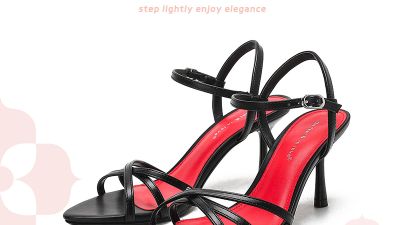
Black Strappy Pointed-Toe High Heel Sandals: A Quietly Elegant Choice for Women
Black strappy pointed-toe high heel sandals offer a quietly elegant approach to everyday dressing. Made from smooth leather, they feature sleek crisscross straps that create a refined, modern look without appearing overly dramatic. The pointed toe adds a polished finish, while the slim stiletto heel brings graceful height and a confident silhouette. Their understated black color makes them easy to pair with tailored trousers, pencil skirts, dresses, or carefully chosen evening separates.
Designed with quiet sole technology, these women’s high heel sandals help reduce distracting clicking sounds as you move, making them especially suitable for office settings, meetings, and other professional environments. An adjustable ankle strap allows for a more secure, personalized fit, supporting comfort through busy days and evening plans. Wear them with a structured suit for a composed work look, or style them with a simple dress for dinner or a date. The balanced combination of delicate straps, smooth leather, and wearable height creates an elegant choice for women who appreciate subtle sophistication.
FAQS
A slim stiletto usually needs stronger internal support than a wide block heel. Higher heels also require more balance testing and material control. Small curves can require custom molds. Shape changes are rarely free.
Layered uppers, reinforced toe boxes, and padded insoles require extra cutting and assembly. Platform soles may need separate bonding and alignment checks. Every added layer creates another risk of wrinkles or weak glue lines.
Rejected pairs, damaged uppers, uneven edges, and failed heel joints create rework. Curved patterns can also leave awkward leather scraps. These losses seem small. They multiply quickly.
High heels allow little tolerance for stitching and fitting errors. A small mistake can distort the toe box or weaken the heel attachment. Experienced workers may cost more, but they often reduce repairs and rejected pairs.
Record minutes for cutting, stitching, heel attachment, finishing, and inspection. Track training hours, repair time, and rejected pairs. Job titles alone can mislead. Actual minutes matter more.
Precision cutting can reduce waste and improve size consistency. However, machines require software, maintenance, electricity, and operator training. Manual work may appear cheaper, but uneven edges can increase inspection and rework.
Include rent, lighting, ventilation, storage, planning, safety checks, and quality inspection. Equipment downtime and repairs also affect each pair’s cost. These expenses continue during small orders. That weakness is easy to overlook.
Test a small batch before expanding production. Include trial samples, failed parts, material waste, labor minutes, and equipment adjustments. Compare total operating costs, not purchase prices. Estimates remain imperfect. Review them after production.
Conclusion
High Heel Manufacturing Cost is influenced by a combination of material selection, product design, labor, technology, and order planning. Materials such as leather, synthetic fabrics, rubber, metal components, adhesives, and decorative elements can vary significantly in price and quality. Heel height, shoe structure, sole construction, and special design details also affect production complexity, since more intricate styles require additional development time, specialized skills, and careful assembly. Labor costs depend on the experience of workers and the number of manufacturing steps needed to complete each pair.
Technology, machinery, factory maintenance, energy use, and daily operating expenses further shape the total cost. Finishing procedures, inspections, quality standards, and defect prevention may increase expenses but help ensure consistent performance and appearance. Finally, order volume, supply chain conditions, delivery requirements, and customization can either reduce unit costs through larger production runs or increase expenses through smaller batches and special materials. Understanding these factors allows manufacturers to estimate costs more accurately and improve production efficiency.